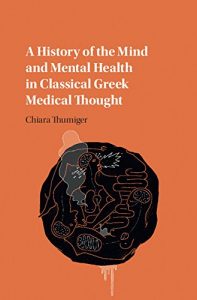
A History of the Mind and Mental Health in Classical Greek Medical Thought
The Hippocratic texts and other contemporary medical sources have often been overlooked in discussions of ancient psychology. They have been considered to be more mechanical and less detailed than poetic and philosophical representations, as well as later medical texts such as those of Galen.
This book does justice to these early medical accounts by demonstrating their richness and sophistication, their many connections with other contemporary cultural products and the indebtedness of later medicine to their observations. In addition, it reads these sources not only as archaeological documents but also in the light of methodological discussions that are fundamental to the histories of psychiatry and psychology. As a result of this approach, the book will be important for scholars of these disciplines as well as those of Greek literature and philosophy, strongly advocating the relevance of ancient ideas to modern debates.
GET IT FREE HERE
Understanding Depression: Volume 2. Clinical Manifestations, Diagnosis and Treatment
This book, in two volumes, focuses on contemporary issues and dilemmas in relation to depression. The aim is to equip readers with an up-to-date understanding of the clinical and neurobiological underpinnings of depression, the clinical manifestations, and the development of more effective treatments. This second volume is devoted specifically to clinical and management issues. Readers will find detailed information on a wide range of frequently encountered and more complicated clinical presentations, with examination of risk factors and links to other conditions. Diagnostic aspects, including progress toward biological classification and the role of neuroimaging, are explored. Current trends in therapy are examined at length, drawing on the latest evidence and covering not only antidepressant medications but also the roles of neurostimulation, combined pharmacotherapy and psychotherapy, mindfulness-based cognitive therapy, and complementary and alternative medicine. The companion volume is dedicated to the underlying biomedical and neurobiological basis of depression. Understanding Depression will be an excellent source of information for both researchers and practitioners in the field.
GET IT FREE HERE
Rational Suicide in the Elderly: Clinical, Ethical, and Sociocultural Aspects
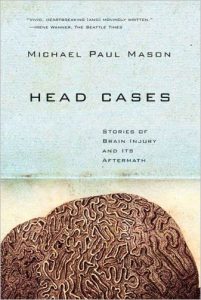
Head Cases: Stories of Brain Injury and Its Aftermath
Head Cases takes us into the dark side of the brain in an astonishing sequence of stories, at once true and strange, from the world of brain damage. Michael Paul Mason is one of an elite group of experts who coordinate care in the complicated aftermath of tragic injuries that can last a lifetime. On the road with Mason, we encounter survivors of brain injuries as they struggle to map and make sense of the new worlds they inhabit.
Underlying each of these survivors’ stories is an exploration of the brain and its mysteries. When injured, the brain must figure out how to heal itself, reorganizing its physiology in order to do the job. Mason gives us a series of vivid glimpses into brain science, the last frontier of medicine, and we come away in awe of the miracles of the brain’s workings and astonished at the fragility of the brain and the sense of self, life, and order that resides there. Head Cases “[achieves] through sympathy and curiosity insight like that which pulses through genuine literature” (The New York Sun); it is at once illuminating and deeply affecting.
GET IT FREE HERE
Evidence-Based Psychotherapy: The State of the Science and Practice
A Comprehensive, Systematic Evaluation of Treatment Effectiveness for Major Psychological Disorders
With over 500 types of psychotherapy being practiced in the field today, navigating the maze of possible treatments can be daunting for clinicians and researchers, as well as for consumers who seek help in obtaining psychological services. Evidence-Based Psychotherapy: The State of Science and Practice offers a roadmap to identifying the most appropriate and efficacious interventions, and provides the most comprehensive review to date of treatments for psychological disorders most often encountered in clinical practice.
Each chapter applies a rigorous assessment framework to evaluate psychotherapeutic interventions for a specific disorder. The authors include the reader in the evaluation scheme by describing both effective and potentially non-effective treatments. Assessments are based upon the extant research evidence regarding both clinical efficacy and support of underyling theory. Ultimately, the book seeks to inform treatment planning and enhance therapeutic outcomes.
Evidence-Based Psychotherapy: The State of Science and Practice:
Presents the available scientific research for evidence-based psychotherapies commonly practiced today
Systematically evaluates theory and intervention efficacy based on the David and Montgomery nine-category evaluative framework
Covers essential modes of treatment for major disorders, including bipolar disorder, generalized anxiety disorder, PTSD, eating disorders, alcohol use disorder, major depressive disorder, phobias, and more
Includes insightful discussion of clinical practice written by leading experts
Clarifies “evidence-based practice” versus “evidence-based science” and offers historical context for the development of the treatments under discussion
Evidence-Based Psychotherapy: The State of Science and Practice is designed to inform treatment choices as well as strengthen critical evaluation. In doing so, it provides an invaluable resource for both researchers and clinicians.
GET IT FREE HERE
http://nitroflare.com/view/97F4D817DC91364/9781119462996_Underaglassmoon.pdf
Mental Health Care: An Introduction for Health Professionals in Australia, 2nd Edition
Mental Health Care: An Introduction for Health Professionals in Australia, 2nd edition is the ideal resource for students who will be future health professionals working in allied health and medical environments in Australia. Set firmly within a wellness framework the text is also useful for health professionals, already working in a health–related field, who need information to support them to effectively assist people who experience mental health problems.
Drawing on the multidisciplinary expertise of Australia′s pre–eminent academics and clinicians, the text offers a user–friendly, jargon–free blend of theory and practice that will enable students to think carefully about the issues involved in mental health care and empower them to develop strategies for working effectively with people across the lifespan and from diverse cultures. Building on the success of the first edition, Mental Health Care: An Introduction for Health Professionals, 2nd edition has been bolstered with an increased focus on coverage of child and adolescent mental health issues.
GET IT FREE HERE
The Stigma of Mental Illness - End of the Story?
This book makes a highly innovative contribution to overcoming the stigma and discrimination associated with mental illness – still the heaviest burden both for those afflicted and those caring for them. The scene is set by the presentation of different fundamental perspectives on the problem of stigma and discrimination by researchers, consumers, families, and human rights experts. Current knowledge and practice used in reducing stigma are then described, with information on the programmes adopted across the world and their utility, feasibility, and effectiveness. The core of the volume comprises descriptions of new approaches and innovative programmes specifically designed to overcome stigma and discrimination. In the closing part of the book, the editors – all respected experts in the field – summarize some of the most important evidence- and experience-based recommendations for future action to successfully rewrite the long and burdensome ‘story’ of mental illness stigma and discrimination.
GET IT FREE HERE
Child Abuse: Diagnostic and Forensic Considerations
GET IT FREE HERE