webmaster

Pulmonary Hypertension: Basic Science to Clinical Medicine

 Miscellaneous  Comments Off on Pulmonary Hypertension: Basic Science to Clinical Medicine
Apr 262018
 

This book provides the framework for a singular reference in the field of pulmonary hypertension. Pulmonary vascular disease is a complex and heterogeneous condition characterized by remodeling of distal pulmonary arterioles that increases pulmonary vascular resistance to affect cardiopulmonary hemodynamic and right ventricular function adversely, resulting in a clinical syndrome of diminished exercise tolerance, shortness of breath, and heart failure-associated morbidity and mortality. Owing to the availability of novel pulmonary circulation-selective pharmacotherapies over the previous decade, the number of pulmonary hypertension patients eligible for treatment has increased substantially. Despite this progress, under-awareness persists within the practicing pulmonary, cardiovascular, and general internal medicine communities. This is due, in part, to the complex array of molecular mechanisms implicated in the pathobiology of PH, as well as cutting-edge discoveries from translational scientific works that provide a new framework by which to understand pulmonary vascular-right ventricular coupling. Taken together, a key educational opportunity is exposed to bridge this knowledge gap through the synthesis of a contemporary text that emphasizes basic science, translational and clinical principles, and treatment strategies for understanding pulmonary hypertension.
GET IT FREE HERE
Share Button

The Bioethics of Regenerative Medicine

 Miscellaneous  Comments Off on The Bioethics of Regenerative Medicine
Apr 262018
 

Regenerative medicine is rich with promethean promises. The use of human embryonic stem cells in research is justified by its advocates in terms of promises to cure a wide range of diseases and disabilities, from Alzheimer’s and Parkinsonism to the results of heart attacks and spinal cord injuries. More broadly, there is the promethean allure of being able to redesign human biological nature in terms of the goals and concerns of humans. Needless to say, these allures and promises have provoked a wide range of not just moral but metaphysical reflections that reveal and reflect deep fault-lines in our cultures.
The essays in this volume, directly and indirectly, present the points of controversy as they tease out the character of the moral issues that confront any attempt to develop the human regenerative technologies that might move us from a human to a post-human nature. Although one can appreciate the disputes as independently philosophical, they are surely also a function of the conflict between a Christian and a post-Christian culture, in that Christianity has from its beginning recognized a fundamental prohibition against the taking of early human life. Even the philosophical disputes that frame secular bioethics are often motivated and shaped by these background cultural conflicts. These essays display this circumstance in rich ways.

GET IT FREE HERE

http://nitroflare.com/view/FC52A816069878B/140208966X.pdf

Share Button

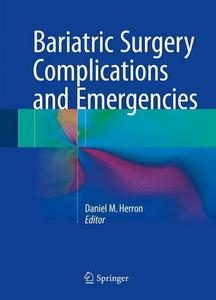
Bariatric Surgery Complications and Emergencies

 Emergency, Surgery  Comments Off on Bariatric Surgery Complications and Emergencies
Apr 262018
 
This book provides a concise, focused and clinically relevant summary of complications and emergencies related to bariatric surgery. The first section of the text addresses general complications related to anesthesia and the stress of surgery, including issues such as deep vein thrombosis, pulmonary embolism, hemorrhage, pneumonia and cardiac complications. Additionally, this section addresses the workup of the bariatric patient with abdominal pain. The second portion of the text focuses on gastric bypass and sleeve-specific complications, including staple line and anastomotic leaks, internal hernia, marginal ulceration, GI obstruction, hernia formation and gallstone disease. The third portion of the book examines metabolic, nutritional and psychological complications after bariatric surgery. The text also covers management of weight loss failure.

Bariatric Surgery Complications and Emergencies serves as a very useful resource for physicians and surgeons who are involved in any parts of evaluation or management of bariatric patients suffering from postoperative complications or emergencies including bariatric surgeons who perform these operations on a regular basis, non-bariatric general surgeons who cover such patients when on-call, surgical trainees, and primary care physicians.

GET IT FREE HERE
Share Button

Pediatric Orthopedic Deformities, Volume 1

 Orthopedics, Pediatrics  Comments Off on Pediatric Orthopedic Deformities, Volume 1
Apr 262018
 

Developmental biology of normal bone and cartilage including histogenesis, molecular/gene and biomechanical aspects is updated and expanded. The book outlines the biology of: bone repair with differing mechanical environments; cartilage repair at articular and physeal sites; and distraction osteogenesis. The generously illustrated text provides an in-depth presentation of the interplay between normal developmental biology, abnormal pathologic states and the influence of operative and non-operative orthopedic interventions on childhood orthopedic deformity. Thirty-four principles underlying the development, progression and management of skeletal deformity in the growing child are defined. Orthopedic management including surgical treatment is discussed for: skeletal dysplasias; epiphyseal growth plate fracture-separations; lower extremity length discrepancies; and deformities of joints and epiphyses due to metabolic, inflammatory, infectious, hematologic, and neoplastic disorders. Treatments are related to extent of deformity, remodeling post-surgery and possible recurrence.
This 2nd edition of Pediatric Orthopedic Deformities has been expanded to cover more regions and disorders and is being presented in 3 volumes.

GET IT FREE HERE

http://nitroflare.com/view/A756A5568BE8E9A/3319205285.epub

Share Button

Medical Spanish for Nurses: A Self-Teaching Guide

 Nursing  Comments Off on Medical Spanish for Nurses: A Self-Teaching Guide
Apr 232018
 

Designed for those with no previous experience speaking Spanish, this guide provides nurses, other medical professionals, and students with the tools to communicate with Spanish-speaking patients. Online audio is available to provide correct pronunciation and prepare learners for a wide array of medical situations. Using a step-by-step approach with plenty of examples, the text enables readers to quickly develop their Spanish knowledge. Question and response scenarios, vocabulary quizzes, anatomy identifi cation, summary exercises, and dialogue reinforce and expedite learning.

Chapters provide appropriate Spanish vocabulary, terminology, and expressions commonly used in health care interactions–as well as likely patient responses–to prepare readers for conversational Spanish. Key sections enable readers to speak with confi dence while taking a patient’s history, assessing pain, conducting a physical assessment, and talking about nutrition and pediatric and adult illnesses. Tips on cultural competence are featured throughout, culminating in a comprehensive chapter on transcultural nursing and the impact of culture, belief systems, and social norms on health care delivery to diverse Spanish-speaking populations.

Key Features:

Requires no previous knowledge of Spanish
Focuses on Spanish words and phrases needed in common health care interactions with patients
Includes multiple interactive print and audio exercises to enhance learning
Gives print and audio examples of common patient responses
Includes examples of common conversations between health care professionals and patients
Provides scripted dialogues for conducting a complete history and physical exam, performing gynecological exams, and teaching scenarios for fetal development, pregnancy, breast exams, testicular exams, and contraception

About the Author
Soledad Traverso, PhD, is a professor of Spanish at Penn State Behrend, located in Erie, Pennsylvania, where she has taught since 1996. She is also the program chair for foreign languages. Dr. Traverso instructs students at all levels, from introductory to advanced courses. A native of Chile, she has written extensively about South American literature and has published books and articles about authors from her home country. In 2013, Dr. Traverso and Laurie Urraro cotaught a medical Spanish continuing-education course for health care providers at St. Vincent Hospital in Erie, Pennsylvania, which became the foundation for this work. As a result of her commitment to providing health care professionals in the Erie community with the ability to speak medical Spanish and the tremendous success of this course, Dr. Traverso received the Distinguished Award for Excellence in Outreach by the School of Humanities and Social Sciences at Penn State Behrend. Dr. Traverso and Dr. Patty Pasky McMahon teach “Conversational Spanish for Future Health Care Providers” at Penn State Behrend’s nursing program, which has become a highly sought-after course among students.

GET IT FREE HERE

http://nitroflare.com/view/5ECF18A5F616C33/Medical_Spanish_for_Nurses.pdf

Share Button

Anatomy Of Medical Errors

 Anatomy  Comments Off on Anatomy Of Medical Errors
Apr 232018
 

A surgeon unknowingly damages the intestines of a nurse expecting only an overnight stay after surgery, beginning a chain of more tragic and preventable errors. The consequences result in the nurse spending several weeks on an ICU ventilator in a drug-induced coma, having four additional surgeries, and requiring a pump to drain the raging infection from her open abdomen. As she awakens and tries to come to terms with what happened to her, she realizes the hospital and doctors will never tell her the whole truth; she has to find out what went wrong on her own. In order to heal, she determines to write and share her story so others may learn how infections, adverse events, and medical errors occur frequently in hospitals, sometimes resulting in death.
More than a narrative, Anatomy of Medical Errors: The Patient in Room 2 shines light on the dysfunction that underpins many hospital organizations, especially teaching hospitals, including silencing of the patient, provider arrogance, flawed coordination of care, poor communication, and lack of ownership for outcomes.

Forever changed by the experience, author Donna Helen Crisp uses her struggles to teach nurses, doctors, and other healthcare professionals how to prevent or avoid potentially dangerous situations, recognize warning signs, and work collaboratively to provide transparent patient care. This book provides an ethical and critical thought process framework for care providers and others through a compelling story about hospital culture. Readers who want to understand how delivery of care works in fast-paced and complex healthcare environments will come away engaged and informed.

About the Author
Donna Helen Crisp, JD, MSN, RN, PMHCNS-BC, became a nurse in 1992 after working in social work, law, and music. After earning her BSN and MSN degrees, she became a mental health Clinical Nurse Specialist in adult psychiatry. She has worked with clients of all ages in various hospitals, long-term care facilities, clinics, homes, and private practice. Whether in the role of staff nurse, supervisor, administrator, consultant, or teacher, her nursing practice of care focuses on the person s suffering.

After teaching in the community college system for five years, Donna Helen became an assistant professor at the UNC Chapel Hill School of Nursing, where she taught for six years in the undergraduate and graduate programs. Her nursing research has focused on chronic illness, suffering, quality of life, advance directives, ethical decision-making, and forgiveness. She has taught on these topics at numerous conferences. Her abiding passion continues to focus on the recognition and amelioration of suffering, wherever it exists. She currently lives in Asheville, North Carolina, where she works as a nurse and writes about nursing.

GET IT FREE HERE
Share Button

Stroke Certification Study Guide for Nurses

 Nursing  Comments Off on Stroke Certification Study Guide for Nurses
Apr 232018
 

This sought-after companion to the author’s popular Fast Facts for Stroke Care Nursing is a must-have study guide for nurses seeking Stroke Certified Registered Nurse (SCRN®) status. It contains comprehensive information about the exam, answers to commonly asked questions, and savvy tips for maximizing your score, along with 300 practice questions and answers with rationales.

Designed to prepare nurses for the multiple-choice format of the certification exam, questions are arranged in chapters correlating with the logical sequence and flow of the exam and reflect the percentage of questions in each exam category. Case studies facilitate the application of knowledge with various examples of common stroke patient situations. A complete practice exam with answers and detailed rationales enables neuroscience nurses, stroke care coordinators, and related specialists to ascertain their strengths and weaknesses. Appendices include a list of medications, national stroke guidelines, and neuroscience terms.

KEY FEATURES:

Q&A app included!
Promotes comprehensive and rigorous study for the SCRN exam
Helps neuroscience nurses, stroke care coordinators, and related specialists maximize their scores
Contains 300 exam-style questions with correct answers and detailed rationales along with a complete practice exam
Includes important information about the exam itself, answers to commonly asked questions, and case studies
Covers content in accordance with the test blueprint of the SCRN exam

About the Author
Kathy J. Morrison, MSN, RN, CNRN, SCRN, FAHA, is a certified neuroscience nurse, a certified stroke nurse, a Fellow of the American Heart Association, and a recipient of the prestigious Pennsylvania State Nightingale Award for Clinical Nursing Excellence. As the stroke program manager for the Penn State Hershey Medical Center, she oversees all aspects of stroke care, from prehospital through stroke clinic follow-up. She played a pivotal role in Penn State Hershey Medical Center’s attainment of The Joint Commission Comprehensive Stroke Center certification and has mentored many stroke program coordinators through the process of attaining Primary and Comprehensive Stroke Center certification. Ms. Morrison serves on The Joint Commission Expert Panel for Stroke Center certification standards.

Ms. Morrison’s published works have appeared in nursing journals and neuroscience course curricula. Her book, Fast Facts for Stroke Care Nursing, has been well received in the nursing community, both as a handy guide for stroke care nurses and as a preparation tool for the SCRN® certification exam. In addition to speaking nationally on stroke-related topics, she is active in community stroke screenings and awareness lectures and facilitates a regional stroke survivor support group. She established the Stroke Coordinators of Pennsylvania (SCoPA) in 2010—a group of stroke coordinators whose collaborative work has resulted in significant improvements in stroke care and outcomes in community hospitals across central Pennsylvania. She is a Fellow of the American Heart Association, a member of the American Heart Association Professional Education Committee and Hospital Accreditation Science Committee, a member of the American Association of Neuroscience Nurses Advocacy Committee, and a board member of the Susquehanna Valley Chapter of the American Association of Neuroscience Nurses.

GET IT FREE HERE
Share Button

Human Health and Physical Activity During Heat Exposure

 Miscellaneous  Comments Off on Human Health and Physical Activity During Heat Exposure
Apr 232018
 

This book provides fundamental concepts in human thermal physiology and their applications in general public, occupational, military, and athletics settings from the biometeorological perspective. The book includes a section on human physiology, epidemiology and special considerations in aforementioned populations, and behavioral and technological adjustments people may take to combat thermal environmental stress and safeguard their health.
The book is the first of its kind to compile multiple disciplines - human physiology, climatology, and medicine - in one to provide fundamental concepts in human thermal physiology and their applications in general public, occupational, military, and athletics settings from the biometeorological perspective;
Developed by experts, scientists, and physicians from exercise physiology, climatology, public health, sports medicine, and military medicine;
Highlights special considerations and applications of thermal physiology to general public, occupational, military, and athletics settings.
GET IT FREE HERE
Share Button

Melanin-Concentrating Hormone and Sleep: Molecular, Functional and Clinical Aspects

 Miscellaneous  Comments Off on Melanin-Concentrating Hormone and Sleep: Molecular, Functional and Clinical Aspects
Apr 232018
 

This book offers a compilation of papers on the role of melanin-concentrating hormone (MCH) in sleep, sleep disorders and neuroendocrine functions. Leading experts in sleep medicine, psychiatry and neuroendocrinology provide a broad perspective on the field, from the anatomical structure and physiology of the MCH system to the connection with other systems influencing sleep and diseases like anxiety and depression. The potential of MCHR-1 antagonists as anxiolytic/antidepressant drugs is also reviewed. The book will represent an interdisciplinary guide for sleep disorder specialists, sleep researchers, psychiatrists, neurologists, psychologists, and behavioral sleep medicine specialists.
GET IT FREE HERE
Share Button

The Breath of Life: An Introduction to Craniosacral Biodynamics

 Miscellaneous  Comments Off on The Breath of Life: An Introduction to Craniosacral Biodynamics
Apr 232018
 

A unique approach to Biodynamic Craniosacral Therapy, a whole-body healing therapy focused on working with the forces underlying health and healing

Cherionna Menzam-Sills draws on her extensive background in pre- and perinatal psychology, embryology, bodywork, Continuum Movement, and other somatic therapies—as well as years of working with her husband, Biodynamics pioneer Franklyn Sills—to present this accessible introduction to the meditative healing practice of Biodynamic Craniosacral Therapy (BCST). This book offers a personal journey of embodied inquiry into each element of biodynamic session work, using meditative explorations, personal descriptions, and illustrations to convey the essence of Biodynamics. It emphasizes breathing and body awareness exercises that help the practitioner become more attuned to her own body so that she can create an effective relational field with her client. An essential guide for new practitioners, students, and clients—as well as a valuable reference for experienced practitioners—this book illuminates the path toward the intelligent formative forces of the mysterious presence called “the breath of life” and its transformative power for health and wholeness.

GET IT FREE HERE

http://nitroflare.com/view/A4C54EE838613DB/The_Breath_of_Life_-_Cherionna_Menzam-Sills%2C_PhD.epub

Share Button